Data Science, AI, and ML
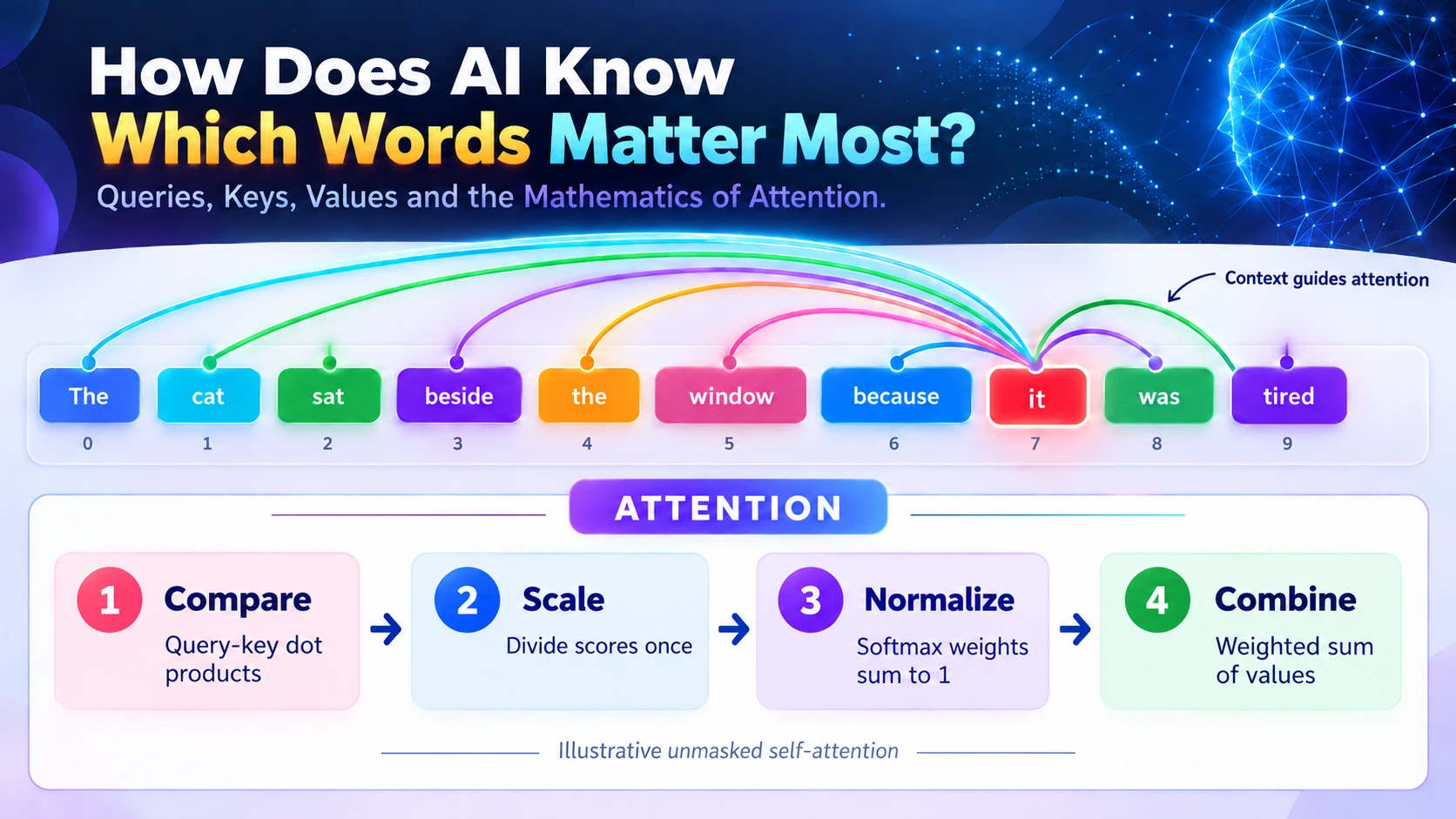
How Does AI Know Which Words Matter Most?
A visual journey through queries, keys, values and attention: how a few mathematical ideas help AI connect words and build context.
Read article
Articles and guidance under DS/AI/ML.
A visual journey through queries, keys, values and attention: how a few mathematical ideas help AI connect words and build context.
Read article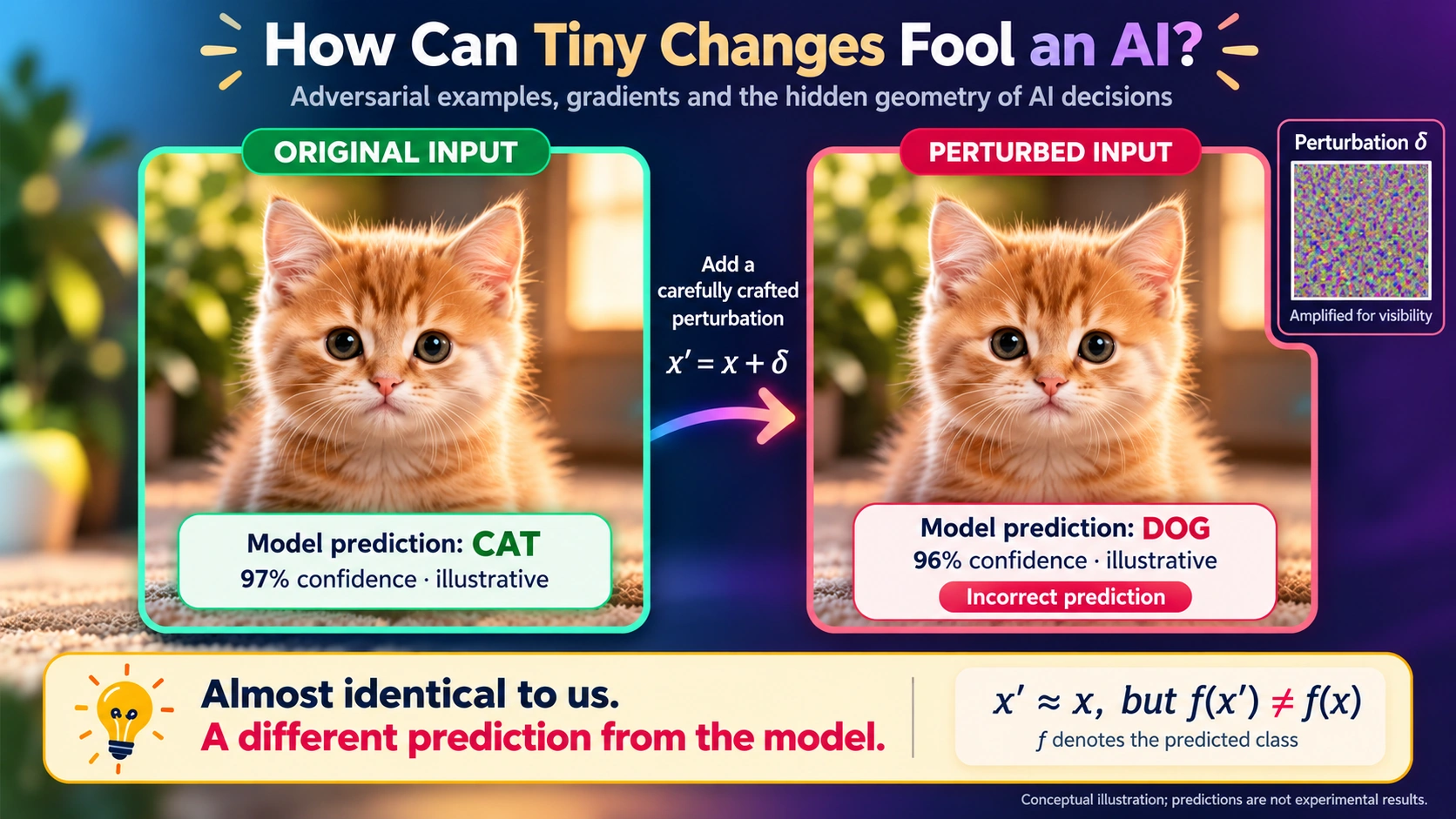
Explore adversarial examples, gradients, decision boundaries, and the hidden geometry that lets almost invisible changes alter an AI prediction.
Read article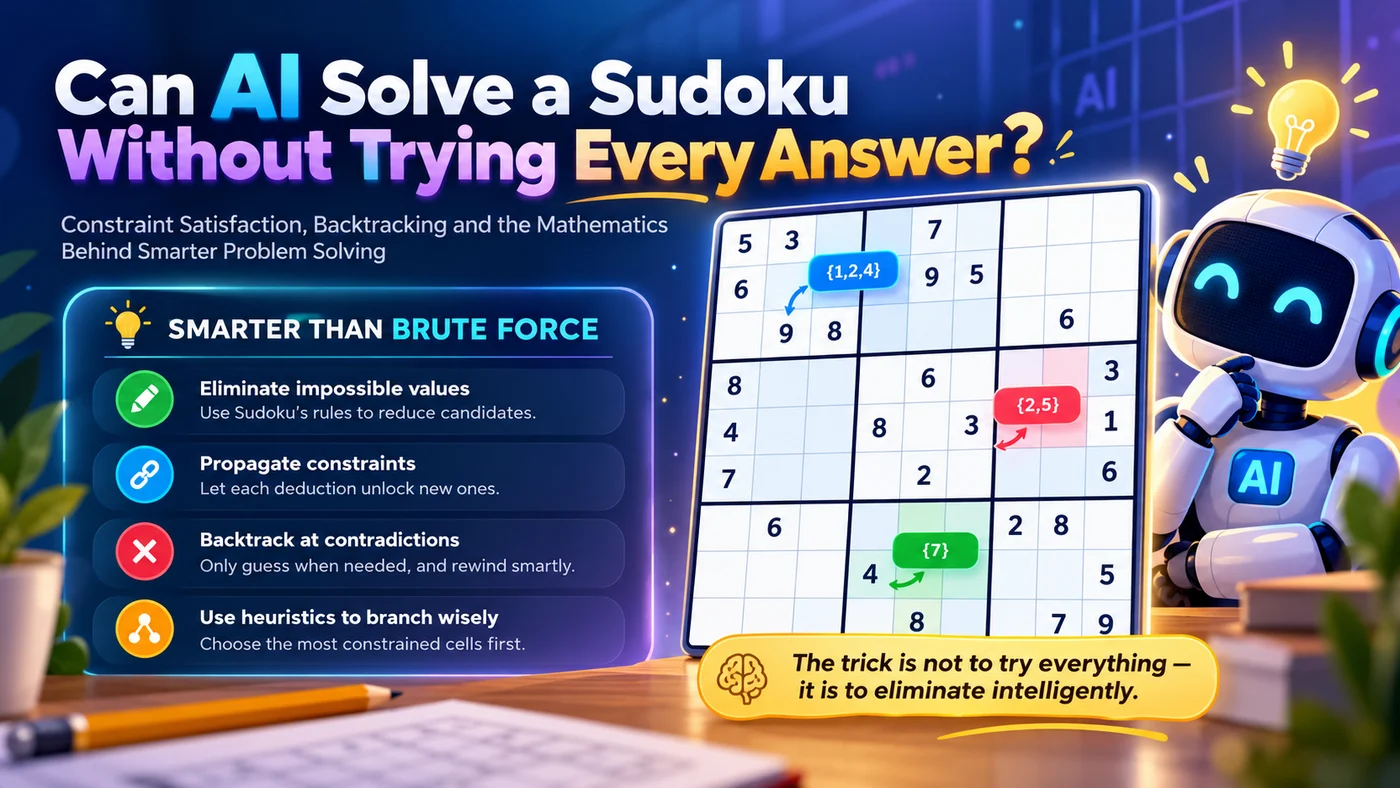
A friendly introduction to Sudoku as a constraint satisfaction problem, with variables, domains, constraint propagation, MRV, backtracking and intelligent search.
Read article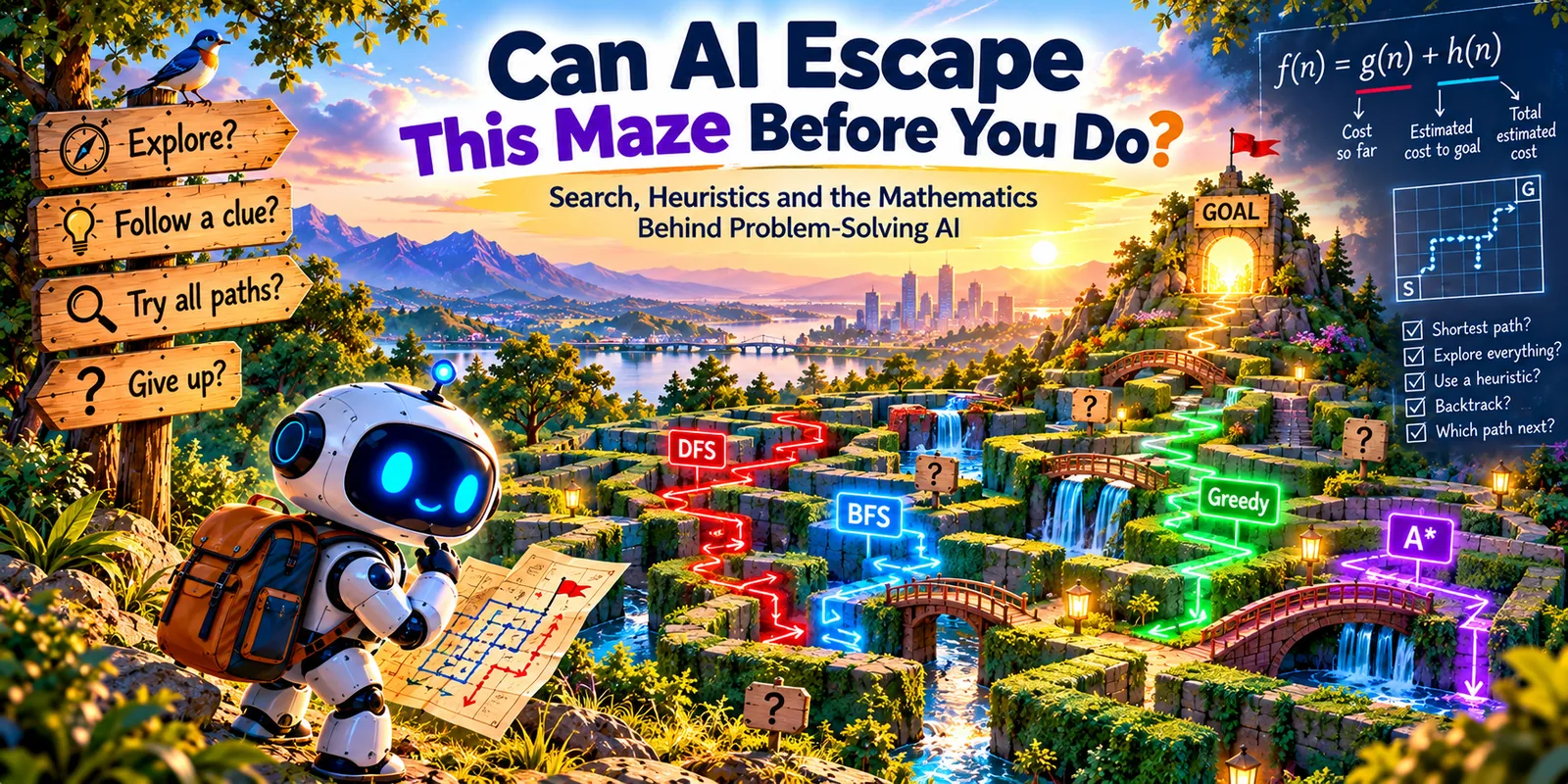
A friendly introduction to search algorithms, heuristics, DFS, BFS, Greedy Best-First Search, A* Search, and the mathematics behind problem-solving AI.
Read article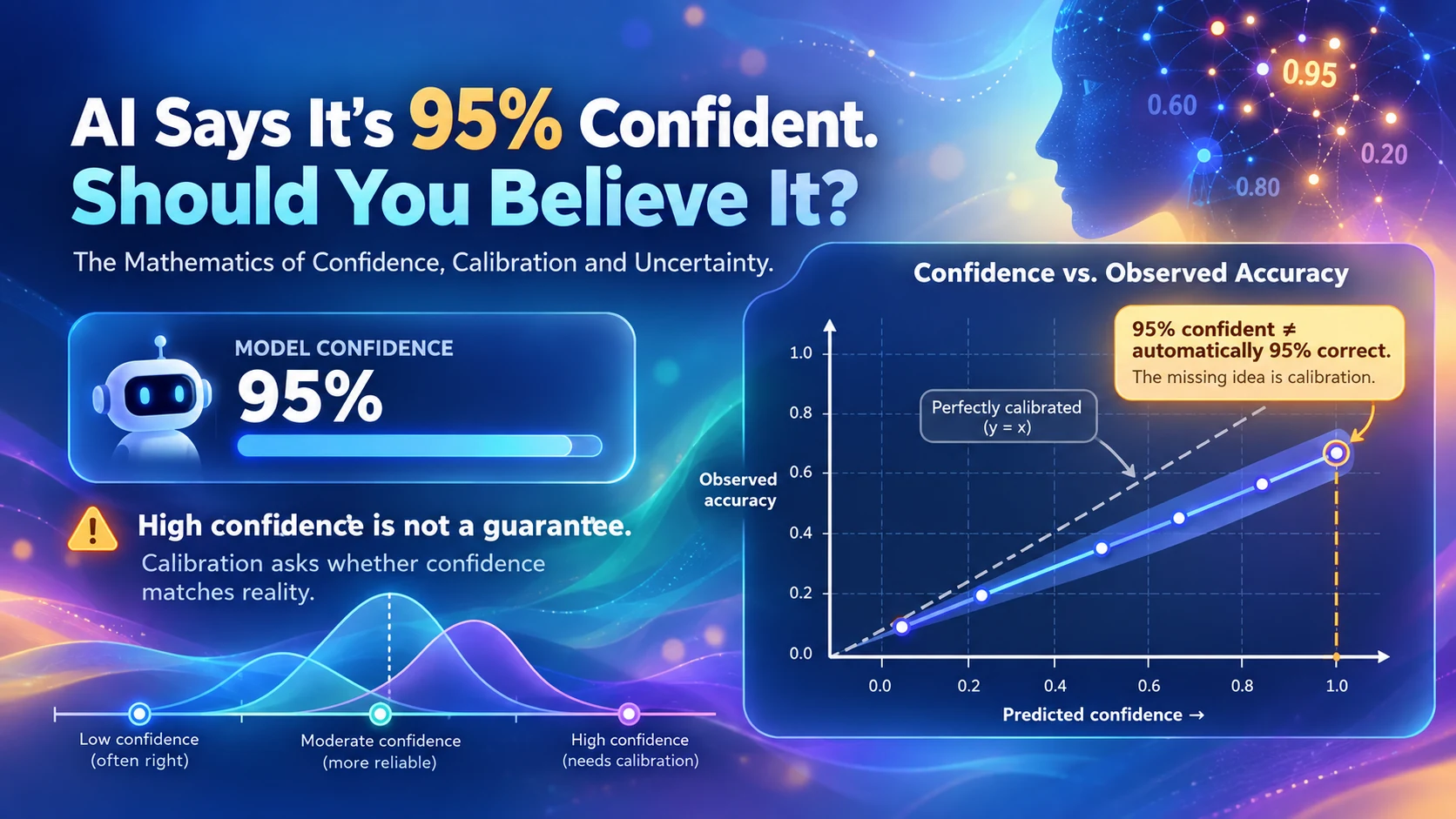
A clear guide to confidence, calibration, uncertainty, reliability diagrams, Brier Score, and why trustworthy AI needs probabilities that match reality.
Read article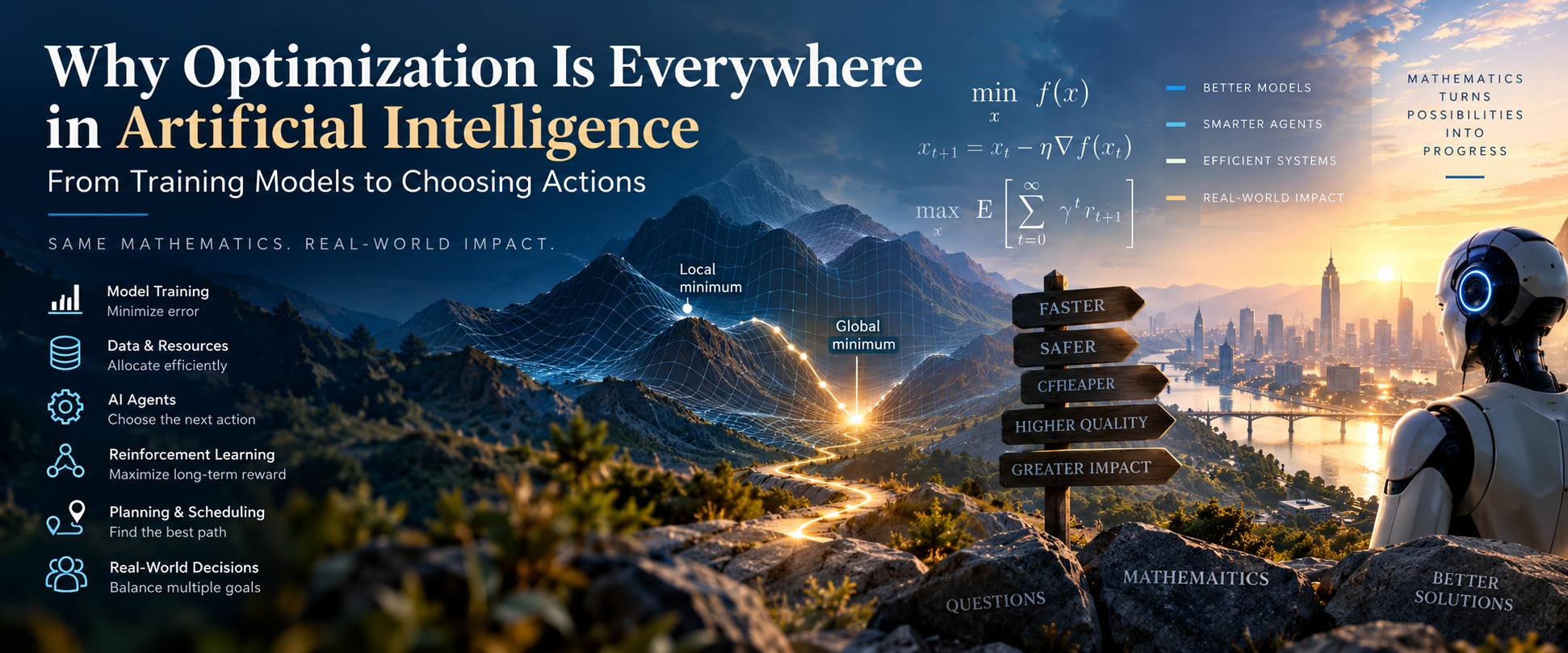
Optimization is the mathematical thread behind training models, reducing prediction error, choosing actions, balancing trade-offs, and designing useful AI systems.
Read article
A clear introduction to reinforcement learning: how agents learn from rewards, mistakes, future consequences, exploration, policies, Q-values, and reward design.
Read article
A clear look at voting, confidence, reliability, disagreement, risk, and why consensus is not always the same as trust in multi-agent AI systems.
Read article
A clear look at the mathematics behind multi-agent AI systems: graphs, task allocation, voting, coordination, game theory, and why more agents do not automatically mean better teamwork.
Read article
Part 3 of the mathematics behind AI agents explores uncertainty, diminishing returns, exploration, optimal stopping, calibration, and when human oversight should take over.
Read article
Part 2 of the mathematics behind AI agents looks at planning: graph paths, optimization, future rewards, constraints, and why the best action now may not be best later.
Read article
AI agents do more than answer questions. They observe, choose actions, use tools, check results, and repeat. The mathematics behind that next move begins with probability, utility, cost, risk, and stopping.
Read article
Accuracy alone is not enough. Learn how model trust is built through evidence: data quality, generalization, metrics, calibration, fairness, robustness, explainability, and monitoring.
Read article
Machine learning is more than calling fit on a model. Mathematical intuition helps learners understand data, uncertainty, error, optimization, and whether predictions can be trusted.
Read article AI learning becomes clearer when students and professionals follow a structured pathway through Python, data, mathematics, machine learning, projects, and emerging AI systems.
Read article© 2026 The Learning Studio. All rights reserved. Privacy Policy Terms of Use Cookie Policy Disclaimer